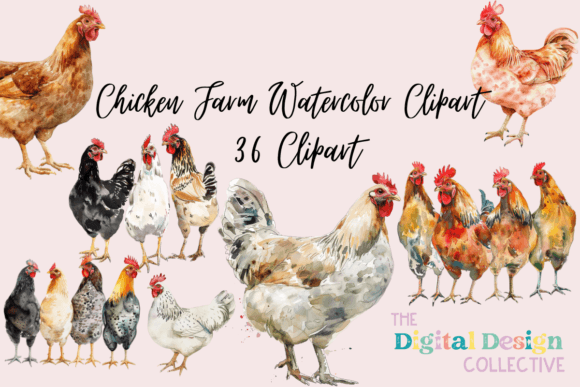
Chicken Farm Watercolor Clipart for Embroidery
First Impressions: Translating Paint to Thread
When I first opened the Chicken Farm Watercolor Clipart collection, my immediate thought was not about how pretty the illustrations were on screen, but how they would translate into a machine embroidery design. As an experienced digitizer and product reviewer, I have learned that digital art and stitched reality are two very different mediums. This specific set of Illustrations captures a nostalgic, pastoral mood perfectly. The soft edges and blended tones typical of watercolor suggest a gentle aesthetic that is highly desirable for current market trends. However, for those of us running a craft business or managing an Etsy shop, the primary question is always practical: will this hold up as a finished product?
The visual personality of these designs leans heavily toward cottagecore and farmhouse styles. They feel organic rather than rigid, which is excellent for creating a relaxed vibe. From a technical standpoint, watercolor-style clipart usually requires a digitizing approach that mimics paint strokes rather than solid blocks of color. When evaluating this collection for real-world use, I look for open spaces that allow the fabric texture to breathe, rather than dense fill stitch areas that can make a garment stiff or cause puckering on lighter materials.
Real-World Application: The Custom Tote Bag Test
To truly evaluate the viability of Chicken Farm Watercolor Clipart, I mentally placed it in a specific production scenario: a custom canvas tote bag intended for a local farmers' market vendor. This is a classic tote bag design application where durability and visual clarity are paramount. Canvas is a textured fabric, which can sometimes swallow fine details. In this context, the watercolor style needs to be bold enough to stand out against the weave of the material.
For this project, I would treat the clipart as a guide for a combination of applique design and detail stitching. Using a solid fabric applique for the main body of the chicken allows the embroidery file to focus thread usage on the shading and outline details using running stitch or light satin stitch accents. This method preserves the watercolor feel without creating a bulletproof patch of thread. If I were to stitch this out fully as a dense fill, the tote bag would lose its drape and utility. By adapting the artwork, the resulting handmade product feels artisanal and high-value, exactly what customers expect when purchasing from a small shop.
This approach also applies beautifully to sweatshirt embroidery. A fleece sweatshirt has a pile that obscures tiny details. For apparel, I would scale the design up and simplify the inner shading, relying on thread colors to create depth rather than complex stitch layering. This ensures the design remains legible and soft to the touch, maintaining the comfort of the garment while showcasing the charming farm theme.
Navigating Technical Limitations and Fabric Choices
While Chicken Farm Watercolor Clipart is versatile, there are specific environments where caution is necessary. Watercolor aesthetics rely on subtlety, which can be lost on dark fabrics unless you plan for a white underlay or a light background block. If you are planning baby embroidery on pastel onesies, the design is likely perfect as-is. However, if you intend to stitch this onto navy blue denim aprons or dark caps, you must verify that the digitized version includes adequate contrast or background elements. Without this, the delicate watercolor nuances will simply disappear into the fabric shadow.
I also advise extreme care when using these designs on stretchy knits or performance fabrics. The fluid nature of watercolor art often translates to directional stitching that can pull fabric out of shape if not properly stabilized. Always use an appropriate stabilizer—likely a cut-away for knits—to prevent distortion. Furthermore, check your hoop size limitations before committing to a layout. Some watercolor compositions are sprawling; forcing them into a smaller hoop by resizing can distort the stitch ratio, making the "paint" look muddy or causing thread breaks.
For items requiring frequent washing, such as kitchen towels or children's clothing, inspect the design for long floating threads or overly delicate running stitch details. Watercolor effects sometimes use long stitches to simulate brush strokes. On a tea towel, these can snag easily. In such cases, modifying the digital embroidery file to shorten stitch lengths or add tacking points is a necessary step to ensure the longevity of the personalized gift or retail item.
Commercial Value and Customer Perception
From a business perspective, utilizing Chicken Farm Watercolor Clipart effectively can significantly elevate your brand's perceived value. Customers associate watercolor aesthetics with bespoke, thoughtful craftsmanship. Unlike generic cartoon vectors, this style suggests an artistic touch that justifies a higher price point for commercial embroidery projects. Whether you are selling holiday embroidery ornaments or boutique branding assets, the cohesive mood of these illustrations helps build a recognizable shop identity.
However, trust is built on execution. A poorly stitched watercolor design looks messy, not artistic. Before listing any new product, create a printable mockup and compare it against a physical test stitch. Does the physical sample capture the same emotion as the digital preview? If the answer is no, adjust your density or color palette. Your reputation as an Etsy seller or maker depends on the consistency between your marketing images and the tangible small shop product arriving at the customer's door.
Essential Designer Notes for Success
Before you load this design into your machine for a client order or inventory run, please adhere to these professional best practices:
- Always Test Stitch: Never assume a digital embroidery file is perfect straight out of the box. Stitch a sample on the exact fabric and stabilizer combination you intend to use for the final project.
- Verify Licensing: Confirm whether the license permits commercial use for finished physical products versus digital redistribution. Protect your business by understanding the terms attached to these design assets.
- Check Color Mapping: Watercolor relies on blending. Ensure your machine’s thread palette matches the intended mood. You may need to blend multiple thread colors in one section to replicate the gradient effect of the original art.
- Evaluate Density: Use software to check stitch density. If the design is too dense for your chosen fabric, edit it to remove underlay or reduce fill patterns to prevent fabric damage.
- Mockup Reality Check: Test the design in black and white mockups to see if the values hold up without color. This reveals whether the design structure is strong enough to stand alone.
- Scale Appropriately: Respect the minimum size requirements. Shrinking a watercolor design below its recommended threshold will result in lost detail and thread jams.
By treating Chicken Farm Watercolor Clipart with technical respect and creative adaptation, you transform a simple digital illustration into a premium embroidered offering. Whether for a custom apparel line, a cherished embroidered patch, or a unique nursery decor piece, success lies in bridging the gap between digital beauty and tactile reality. Take the time to understand the design's behavior, and your finished work will reflect both artistic vision and professional mastery.